Anton Corbijn's Influence
2026-01-24
/
6 min read
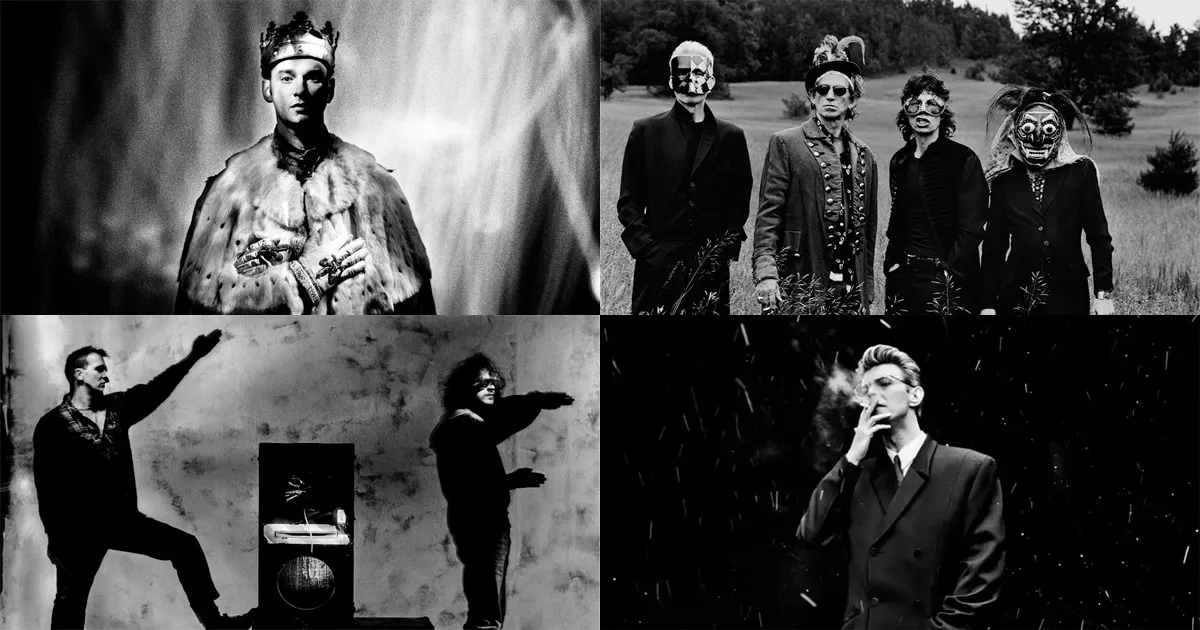
Anton Corbijn is a Dutch photographer, best known for his photographs of famous rock stars, music artists as well as for movies. Recently he has inspired me to start doing film photography with a film roll, as it gives you a certain quality that is hard to replicate in post-production when using digital, alongside the anticipation of seeing your film as you don't know what you shot until you receive your developed photos.
About Corbijn
Corbijn was born in 1955 in Strijen to a preacher and a nurse. Around 1975 he started his career as a photographer when he saw Dutch rock star Herman Brood play in a cafe in the Dutch city Groningen, after which he took a lot of photographs of Herman Brood & His Wild Romance. In the following years he would become a photographer for a weekly music paper called the New Musical Express. From there, he started making photographs for many other artists and musicians, developed a great relation with bands like Depeche Mode and U2, and made two movies.
Corbijn got quite popular through the way his photos looked at the beginning of his career. He would often use high speed (most likely pushed) B&W film, often because it was the cheapest available to him, which would then add a nice grain to the photographs.
During his 50 year long career, he would photograph musicians like Depeche Mode, U2, Nirvana, Henry Rollins, Bjork and Tom Waits, as well as others like Robert De Niro, Stephan Hawking and Clint Eastwood. During all these years, he also directed a movie about the life of Joy Division singer Ian Curtis based on the book written by his widow, Deborah Curtis, as well as being a director on 2010 movie The American starring George Clooney and 2014 movie A Most Wanted Man. Before him making actual movies, he also made music videos, many for Depeche Mode, but also for other groups like Nirvana, Coldplay, Danzig and Echo & The Bunnymen.
What Corbijn has thought me
As someone who often looks at what other photographers do and listens to what they tell in interviews, Corbijn has thought me a lot about photography.
The three elements of a good photo
For myself, I had a rule that a good photograph had to connect 3 elements, one is that it had to say something about the artist, it had to say something about the photographer and it had to bring something new that had not been seen yet. If theres something from all these three in there, I thought it is a great picture.
Every photograph can be a good photograph, but there is a difference between a "good" photograph and a "great" photograph. That being something fresh, something interesting. If the photo you are making has been made 10 times before, it isn't interesting, fresh or new: it's something that has been done before you.
What I took from this is to be as creative as I can be. Try new things all the time, try to look for something other photographers don't do, and in the case of portraits, add some emotion to them, as that can tell a lot about the person being photographed, and adds a new depth to the picture.
Your style is your inability
I came to the conclusion that what people call your style is your inability to do it any other way. I wasn't searching for a style when I started taking pictures, I couldn't do it any other way.
What really struck me from this was that being a photographer means you see a lot of photographs taken by other people and thinking "wow, I wish I could do something like that", but you can't. You take pictures the way you can, and maybe you learn some things along the way, but some things may be out of reach (at least at that time). Your style is what you can do and how you were taught how to take pictures, and how you make your pictures is basically limited by not being able to do it in another way.
Your access to people
You can only be as good as your access to people. If you're a amazing photographer, but nobody wants to be photographed by you, then that's a tough position,. So if you're in front of people you want to photograph, that's half the work done.
Without a subject, or without a person in front of the camera, your photo simply won't work. Getting someone to photograph, you already get a big part done. If you have a subject, you can then work on how you want your photo to be, and when the photos are done, then that's it, you're done. As Corbijn said later during this interview, you can only be as good as your access to people, so as a photographer, you also have to reach out to people.
Now, after being inspired for a few months, I learned to really appreciate others work a lot, and to look at it more "in depth" to see techniques, styles and what I could do to add more to my photographs. Corbijn's photographs of musicians and artists show his style that he always tries to add something to the photo about the artist in front of the camera, and that expressions can tell a great story about the person in front of the camera, making a photograph more interesting than "just another photo" of a person.
Sources:
- All thumbnail photos made by Anton Corbijn, All Rights Reserved.
- Anton Corbijn on his trademark style, Fotografiska, YouTube, July 2025
- Interview with Anton Corbijn: How I became a Photographer, Louisiana Channel, YouTube, May 2019